Chhath Puja is one of the most sacred and ancient festivals celebrated in Bihar, Jharkhand, and eastern Uttar Pradesh, dedicated to Lord Surya (the Sun God) and Chhathi Maiya.
This festival symbolizes purity, devotion, and gratitude towards the Sun for sustaining life on Earth. It is observed twice a year — Chaitra Chhath (March–April) and Kartik Chhath (October–November), with the latter being the grandest.
When is Chhath Puja Celebrated?
Chhath Puja begins on the sixth day (Shashti Tithi) of the Kartik Shukla Paksha in the Hindu calendar, usually falling in October or November.
In 2025, Chhath Puja will be celebrated from 25th to 28th October.
The festival lasts for four days, and each day holds deep spiritual and cultural significance.
Significance of Chhath Puja
-
The festival is devoted to worshipping the Sun God (Surya Bhagwan), who is considered the giver of life and energy.
-
Devotees thank the Sun for providing light, health, prosperity, and well-being.
-
Chhathi Maiya, believed to be the sister of Surya Dev, is also worshipped for the protection and happiness of children.
-
It is a festival of cleanliness, discipline, and devotion, followed by men and women equally, known as Vratis.
Four Days of Rituals in Detail
1. Nahay Khay (Day 1)
-
The festival begins with a ritual bath in a river or holy water source.
-
Vratis clean their homes and prepare a simple, satvik meal (often rice, dal, and pumpkin) cooked in bronze utensils without garlic or onion.
-
This day marks the purification of body and soul.
2. Kharna (Day 2)
-
The second day involves fasting from sunrise to sunset.
-
In the evening, devotees prepare “Kheer,” “Roti,” and “Banana” as offerings.
-
After offering these to the deities, Vratis end their fast and prepare for the main rituals.
3. Sandhya Arghya (Day 3)
-
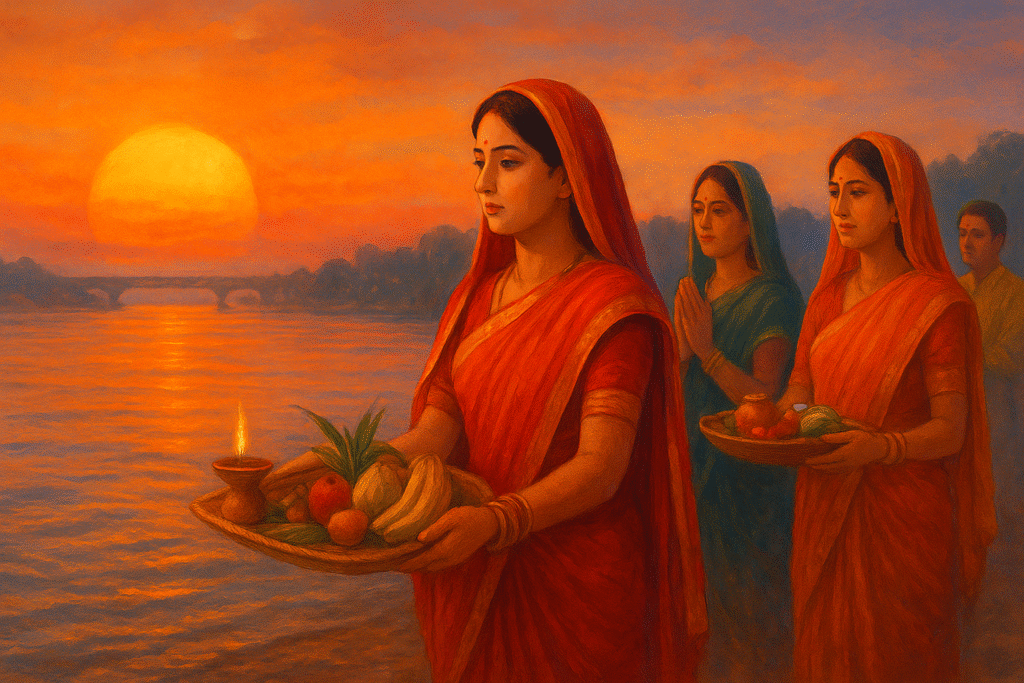
The most beautiful part of Chhath Puja, where devotees offer Arghya (water offerings) to the setting sun at riverbanks or ponds.
-
Women wear traditional sarees, and men accompany them with fruits, sugarcane, coconuts, and “Thekua” in bamboo baskets.
-
The evening becomes magical with the chants, diyas, and devotion.
4. Usha Arghya (Day 4)
-
The final day begins before sunrise. Devotees offer Arghya to the rising sun and pray for family health, peace, and prosperity.
-
After prayers, Vratis break their fast and distribute Prasad among family and neighbors.
Popular Prasad of Chhath Puja
-
Thekua (sweet wheat flour delicacy)
-
Rice kheer (milk and rice dessert)
-
Fruits (especially banana, coconut, and sugarcane)
-
Rice laddoo and singhara (water chestnut)
Each food item is pure, home-made, and prepared with devotion — representing simplicity and purity.
Where It’s Celebrated in Bihar
-
Patna – Ganga ghats like Adalat Ghat, Digha Ghat, and Collectorate Ghat.
-
Gaya – Falgu riverbanks.
-
Muzaffarpur, Bhagalpur, Darbhanga – local ponds and rivers.
-
Village areas – people make temporary ponds for worship.
Everywhere, you can witness thousands of devotees standing knee-deep in water, offering prayers as the sun sets or rises.
Cultural Importance of Chhath Puja
-
Chhath represents the deep bond between humans and nature.
-
It’s not only a religious festival but also a symbol of women empowerment, as most Vratis are women.
-
It unites communities — rich or poor, everyone participates equally.
-
For Biharis living outside the state, Chhath is a connection to their roots and traditions.
Chhath Puja 2025 Theme: “Clean Ghat, Safe Ghat”
In recent years, the Bihar government has emphasized the theme of eco-friendly and safe Chhath Puja — urging citizens to use natural offerings, avoid polythene, and maintain water purity.